
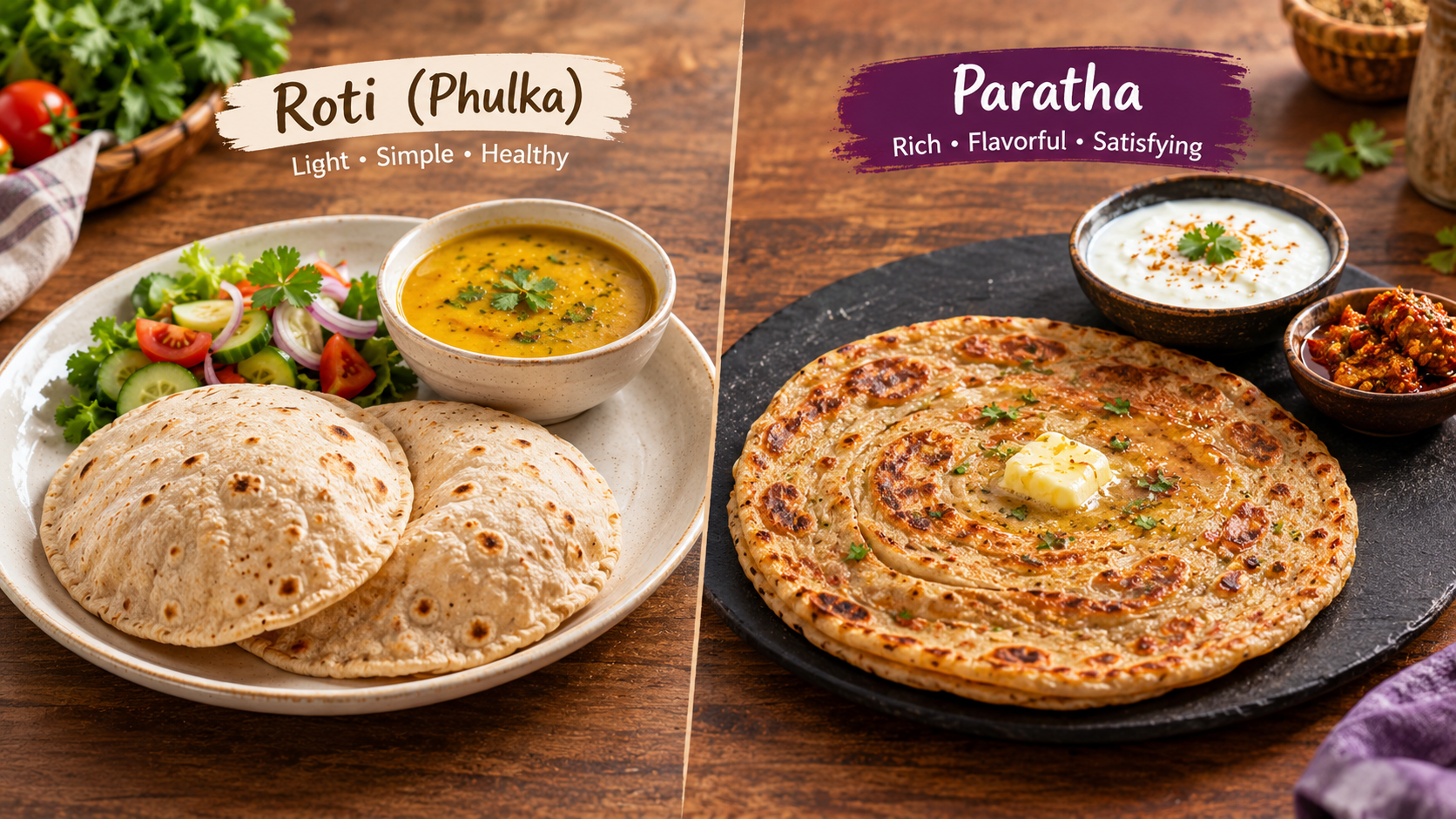

Roti and paratha are both staples in Indian kitchens, but when it comes to health, the question is common: Paratha vs Roti – which one is healthier?
The short answer: roti tends to be lighter and lower in calories, while paratha is richer and more energy-dense because of the ghee/oil and layered dough. Both can fit into your goals—whether that’s weight loss, maintenance, or muscle gain—if you choose them smartly and pay attention to portions.
In this blog, we’ll compare:
-
Calories and nutrition (paratha vs roti)
-
How ingredients and cooking methods affect health
-
Which bread works better for different goals
-
How to enjoy both in a balanced way at a community kitchen
And if you’ve already read our earlier blog on the “health benefits of roti”, we’ll link to it naturally so you get the full picture.
Roti (Chapati/Phulka)
-
Ingredients: Whole wheat flour (atta) + water (sometimes a pinch of salt)
-
Cooking: Cooked on a tawa or as phulka, usually without added fat (or just a light ghee brush)
-
Texture: Soft, light, everyday flatbread
-
Typical use: Daily meals, diet-friendly plates
Roti is primarily a complex carb and fibre source, with minimal fat unless you add ghee or oil on top.
Paratha
-
Ingredients: Whole wheat flour + water + salt + ghee/oil (in the dough and on the tawa)
-
Cooking: Layered/laminated dough, shallow-fried
-
Texture: Flaky, rich, flavourful
-
Typical use: Special meals, comfort food, stuffed versions (aloo, gobi, paneer, etc.)
Because of the added fat and layers, paratha usually has more calories and fat than roti. That doesn’t make it “bad”—it just means it’s a heavier, more indulgent option.
Calories & Nutrition: Paratha vs Roti (Side-by-Side)

Exact numbers vary depending on size, flour quality, and how much ghee/oil is used, but these approximate values give you a clear picture.
Typical Values (Per Medium Piece, ~6 inch)
Multiple nutrition guides show the same pattern: one paratha can have 2–3 times the calories of one roti, mainly because of the added fat.
Even if you brush 1 tsp of ghee on a roti (adding ~40–50 kcal), it usually still has fewer calories than a typical paratha.
Ingredients & Cooking Method: How They Affect Health
1. Added Fat (Ghee/Oil)
-
Roti: Traditionally made without added fat, so fat content is minimal.
-
Paratha: Requires ghee/oil in the dough and on the tawa to create layers. This is the main reason paratha is calorie-dense.
Health angle:
-
If you’re in a calorie deficit (weight loss), being mindful of fat helps.
-
If you’re in maintenance or muscle gain and your overall diet is balanced, a moderate-ghee paratha can still fit comfortably.
2. Flour Type
Both are usually made from whole wheat atta, which is better than refined flour (maida) because it offers:
-
More fibre
-
Better satiety (feeling full)
-
Slower release of energy (better for blood sugar)
In a community kitchen, choosing whole wheat–based roti or paratha already puts you on a healthier foundation.
3. Stuffing (Stuffed Paratha vs Plain Roti)
-
Plain roti: Just atta + water.
-
Stuffed paratha: Filled with aloo, gobi, paneer, mixed veg, etc.
Stuffed paratha:
-
Pros: Extra nutrients (vegetables), protein (paneer), variety
-
Cons: More calories and fat, especially if the stuffing has a lot of oil or butter.
If your goal is weight management, a plain roti + sabzi/dal combo often gives you better control. If you want variety, a lightly stuffed paratha (less oil, more veg) is a smart middle ground.
Paratha vs Roti: Which Is Better for Your Goal?

1. Weight Loss
Better choice: Roti (plain, minimal or no ghee)
Why:
-
Fewer calories per piece
-
Lower fat, especially saturated fat
-
Easier to control portions (for example, 2–3 rotis vs 1–1.5 parathas)
Tips:
-
2–3 medium rotis + dal + sabzi + salad makes a balanced, calorie-friendly plate.
-
You can still enjoy paratha occasionally—just keep the frequency and portion in mind, and balance the rest of your day.
If you’ve already read our blog on the health benefits of roti, you’ll find detailed info on roti’s fibre, low-fat profile, and everyday nutrition benefits. This blog builds on that by comparing roti directly with paratha.
2. Weight Maintenance / Balanced Eating
Choice: Include both, smartly
-
Most days: Roti as your main bread
-
Some days / special meals: 1 paratha (preferably whole wheat, moderate ghee)
The key is a balanced weekly pattern, not just one perfect meal.
3. Muscle Gain / High Energy Needs
Choice: Mix of roti + paratha, focusing on total calories and protein
-
Paratha is an energy-dense carb source, helpful when you need a calorie surplus.
-
Pair it with dal, paneer, curd, chana, and other protein sources.
Example plate:
-
1 paratha + 1 roti
-
Dal or paneer sabzi
-
Curd or raita
-
Salad
This combo balances carbs, protein, and healthy fats.
4. Diabetes / Blood Sugar Management
Better choice (generally): Roti, with portion control
-
Whole wheat roti tends to have a better glycemic impact when fat isn’t excessive.
-
Paratha’s higher fat and heavy cooking can make blood sugar response less predictable, especially in large portions.
Tips:
-
1–2 medium rotis + lots of non-starchy vegetables + protein (dal/paneer)
-
Keep paratha occasional and planned, and adjust overall carbs on those days.
Taste, Satisfaction & Culture: It’s Not Just About Numbers
Health isn’t only about calories. Satisfaction, taste, and culture matter too:
-
Paratha’s flavour, layers, and comfort are different from any roti.
-
For festivals, family gatherings, or “comfort days”, paratha is emotionally satisfying.
-
Roti is the backbone of daily meals—light, versatile, easy to pair.
A smart approach is to make roti your everyday base and paratha your intentional treat—no guilt, but no daily overload either.
Common Myths: Paratha vs Roti

Myth 1: “Paratha is always unhealthy.”
Reality: Paratha isn’t inherently “bad”. The problem comes from:
-
Too much ghee/oil
-
Very large portions
-
Eating multiple parathas every day
A whole wheat, moderate-ghee paratha can fit into a balanced diet.
Myth 2: “Roti is always healthy, no matter how many you eat.”
Reality: Roti still has calories. Four to five large rotis + heavy sabzi + rice can easily push you into a calorie surplus.
The healthier approach: portion control + balanced plate.
Myth 3: “For weight loss, you must only eat roti and never paratha.”
Reality: The core rule for weight loss is a calorie deficit.
-
If you eat one paratha occasionally but keep your overall calories in check, you can still lose weight.
-
Making paratha a “never” food can be unsustainable. It’s better to manage frequency and portions.
Community Kitchen Context: How to Choose Between Roti and Paratha
Community kitchens focus on wholesome, accessible, and satisfying meals. Here are some practical tips:
1. Default Plate Suggestion
-
Most days:
-
2–3 rotis
-
1 dal or sabzi
-
Salad + curd/raita
-
This is a balanced, calorie-friendly routine plate.
2. Paratha Days
-
1–2 times a week or on special occasions:
-
1 paratha (plain or lightly stuffed)
-
Extra sabzi/salad
-
Curd/raita for balance
-
This way, you satisfy your taste buds without compromising your health goals.
3. Cooking Style Matters
In a community kitchen, when you:
-
Use whole wheat atta
-
Keep oil/ghee moderate
-
Prefer fresh, minimally processed ingredients
then both roti and paratha become better-for-you versions compared to typical restaurant-style, heavy-oil versions.
Paratha vs Roti: Quick Decision Guide
If you need a quick decision:
-
Goal: Weight loss → Mostly roti, paratha occasional
-
Goal: Maintenance → Roti as primary, paratha 1–2 times/week
-
Goal: Muscle gain / high activity → Mix of roti + paratha, focus on total calories & protein
-
Goal: Diabetes / sugar control → Roti preferred, paratha limited and planned
-
Goal: Taste & comfort (without overdoing it) → Roti daily, paratha as a planned treat
And if you want to understand in detail whether paratha is overall healthy or not, you can also read this blog on The Paratha Express:
Is Paratha Healthy or Unhealthy? A Simple Guide for Food Lovers.
There, you’ll find a full breakdown of calories, ingredients, and smart choices.
Simple Tips to Make Both Roti & Paratha Healthier
Whether you choose roti or paratha, these tweaks help:
-
Use whole wheat atta only, avoid maida.
-
Keep ghee/oil minimal on roti; if you use it, limit to ½–1 tsp.
-
Use moderate oil/ghee in paratha, and avoid excess oil in the stuffing too.
-
Control portions:
-
Roti: 2–3 medium pieces per meal (adjust based on your goal)
-
Paratha: 1 (max 1.5) per meal, especially if you’re weight-focused.
-
-
Balance your plate:
-
½ plate: non-starchy vegetables/salad
-
¼ plate: protein (dal, paneer, curd, chana)
-
¼ plate: carbs (roti/paratha/rice)
-
Final Verdict: Paratha vs Roti – Which Wins?
Nutritionally:
-
Roti tends to be lighter and better suited for lower-calorie, everyday meals.
-
Paratha is more energy-dense and rich, making it great for occasional comfort meals or higher-calorie needs.
Practically:
-
The ideal approach: roti as your everyday base, and paratha as your planned treat.
-
Enjoy both with whole wheat, moderate fat, and a balanced plate.
So the answer to “Paratha vs Roti – which is healthier?” is:
Roti is generally lighter, but a smart paratha can still be part of a balanced diet.
Just pay attention to frequency, portion sizes, and your overall diet—both are the heart of an Indian thali, and both have a place at your table.