
For generations, Punjabi homes kept a steel dabba of panjiri ready for the cold months. It went to new mothers, growing children and elders. Community Kitchen is bringing back the most authentic version of it, hand-roasted in small batches by the women of our Zirakpur kitchen.
The history of panjiri
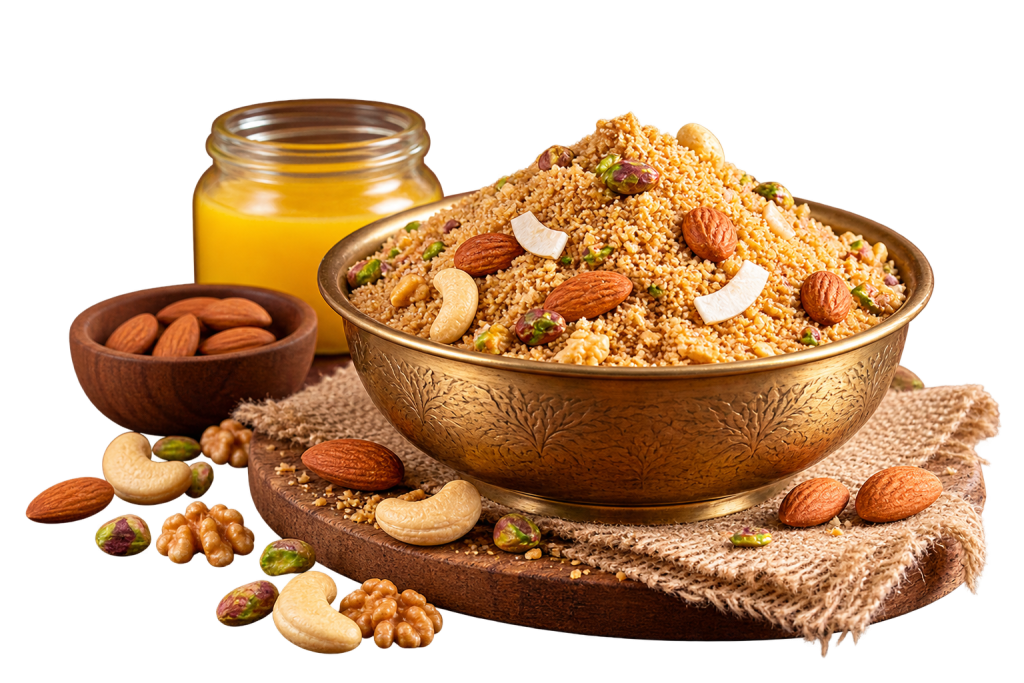
Panjiri comes from the kitchens of undivided Punjab. It is whole-wheat atta roasted slowly in desi ghee until it turns golden and nutty, then mixed with dry fruits, seeds, edible gum (gond) and warming spices. No one wrote the recipe down. Mothers taught daughters by smell, by colour, and by the sound of atta in hot ghee.
The history of panjiri
Sent with love
The history of panjiri
The history of panjiri
Every ingredient in our panjiri is there for a reason. These are the same ingredients Punjabi grandmothers have used for generations, roasted one at a time so each one keeps its own flavour.

The base
Stone-ground whole wheat, roasted slowly until golden and nutty. This is the step that decides the flavour.

The soul
Generous amounts of real desi ghee, and no vanaspati or refined oil. It also keeps panjiri good for months.

Almonds, cashews & more
Hand-chopped and roasted separately so they stay crunchy in every spoonful.

Traditional winter ingredients
Edible gum fried until it puffs up, and lotus seeds (makhana) for a light crunch. Both are classic winter panjiri ingredients.


Saunth, elaichi
Dry ginger and green cardamom, the gentle warming spices traditionally used in winter panjiri.

Measured, not overpowering
Just enough sweetness to taste like home, so the roasted wheat and ghee come through first.

Nothing artificial
No artificial colours, flavours or preservatives. Careful roasting and pure ghee are what keep it fresh.
The history of panjiri
Every ingredient in our panjiri is there for a reason. These are the same ingredients Punjabi grandmothers have used for generations, roasted one at a time so each one keeps its own flavour.
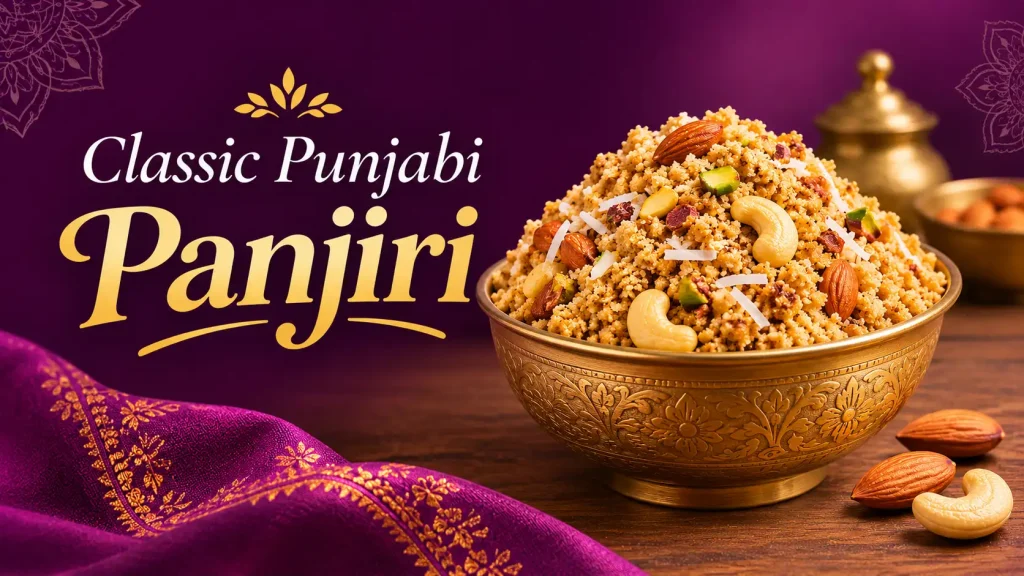
Loose, crumbly and fragrant with ghee, this is the panjiri from Nani’s dabba. Eat it by the spoon, stir it into warm milk, or sprinkle it over your morning dalia.
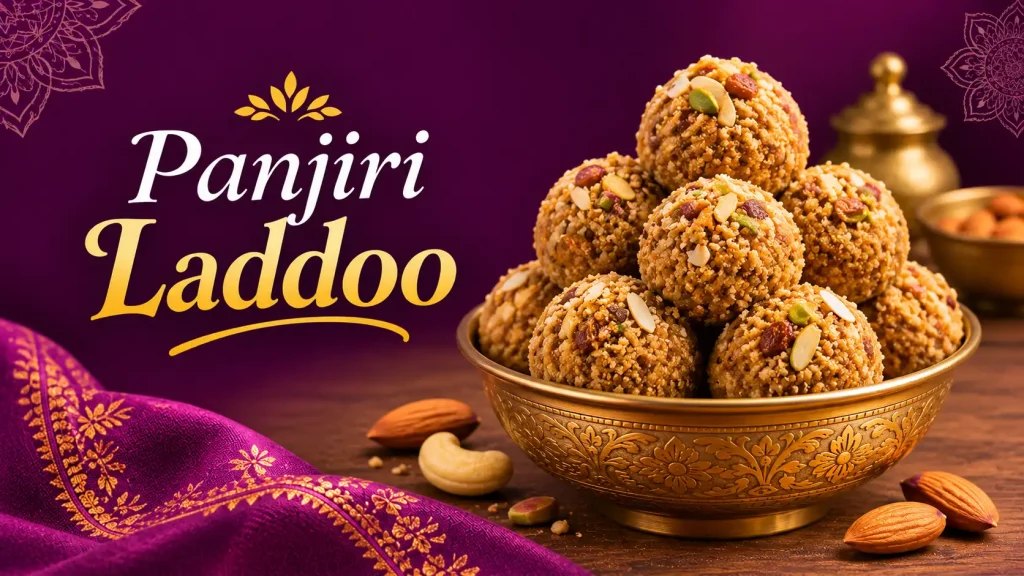
Loose, crumbly and fragrant with ghee, this is the panjiri from Nani’s dabba. Eat it by the spoon, stir it into warm milk, or sprinkle it over your morning dalia.
The history of panjiri
Traditionally, panjiri was made once and stored for the whole season. Ours works the same way. Atta roasted slowly in pure ghee keeps naturally, without preservatives, for up to 6 months, so you can stock up, send it across the country, or keep a gift box ready.
Keep it in an airtight container in a cool, dry place. No fridge needed.
Keep it in an airtight container in a cool, dry place. No fridge needed.
Easy to send to family in other cities, or pack in a suitcase going abroad.
Made in small batches, with the packing date printed on every pack.
Made by the women of Community Kitchen
When you choose Community Kitchen panjiri, you are keeping a tradition alive and helping a woman build her future.
Up to 6 months from the packing date when stored in an airtight container in a cool, dry place. Always use a dry spoon.
No. Panjiri stays fresh because of careful slow-roasting and pure desi ghee. We add no artificial preservatives, colours or flavours.