
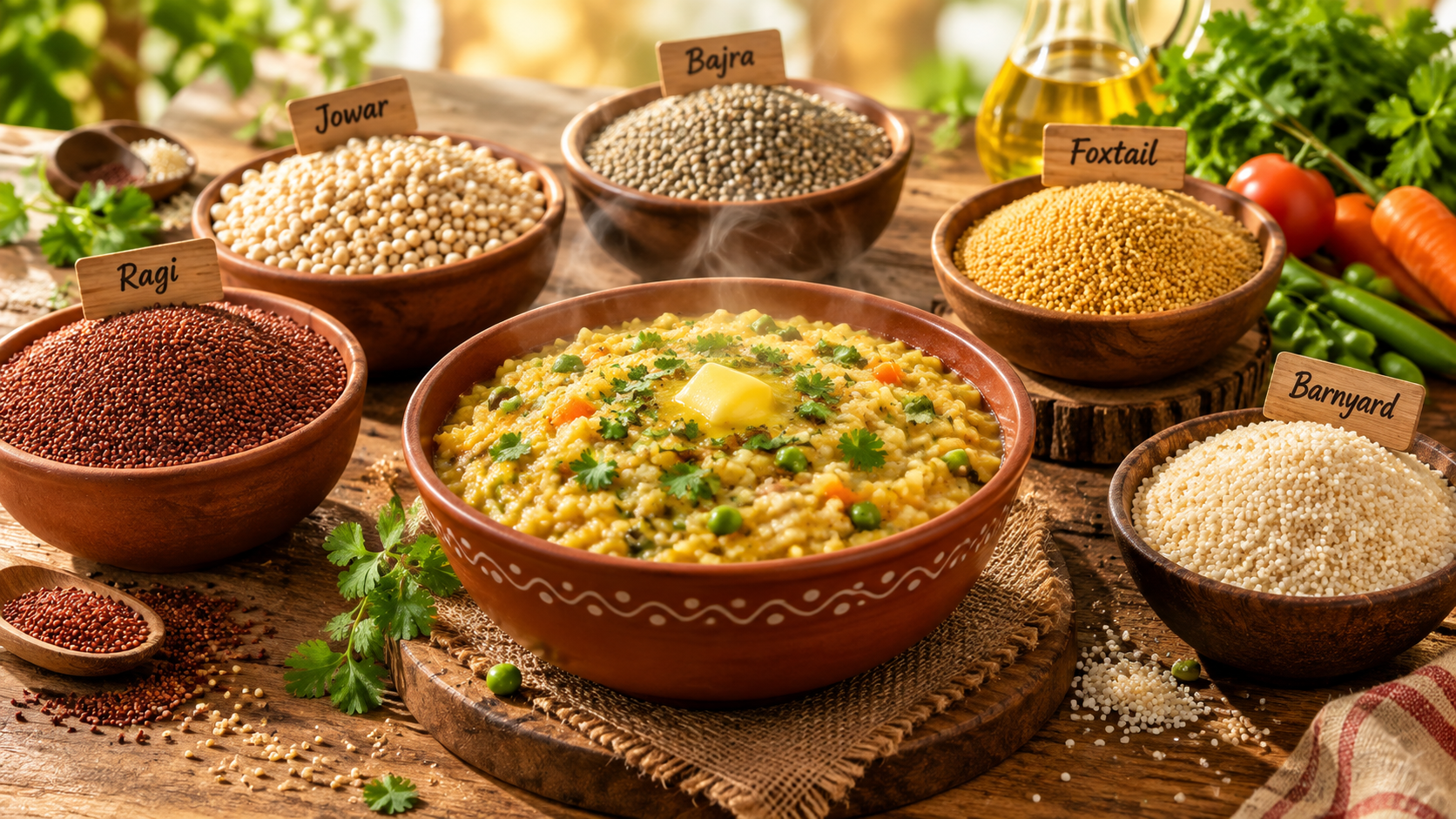

If you’ve been hearing a lot about millets lately but aren’t sure where to start, you’re not alone. Once a staple in Indian households, millets are now making a strong comeback as “nutri-cereals”. But what exactly are they, and why should you care?
In this guide, we’ll break down:
-
What millets are
-
Common types of millets in India
-
Key health benefits of eating millets
-
Simple, everyday meal ideas
-
How you can try millet-based dishes at Community Kitchen
Whether your goal is better digestion, steadier energy, or just a more varied diet, millets are worth a regular spot on your plate.
What Are Millets?
Millets are small-seeded cereal grains that have been grown and consumed across India and Africa for thousands of years. Unlike refined wheat and white rice, millets are:
-
Naturally gluten-free
-
Rich in dietary fibre
-
Good source of plant protein
-
Packed with minerals like iron, magnesium, phosphorus, and calcium
-
Lower glycemic index (GI) compared to many refined grains
Because of this nutritional profile, millets are often recommended for people looking to support digestion, manage blood sugar, improve heart health, or simply move beyond only rice and wheat in their daily meals.
Common Types of Millets in India
India grows more than a dozen varieties of millet. They are broadly grouped into major millets, minor millets, and pseudo-millets.
Major Millets
-
Jowar (Sorghum / Great Millet)
-
Rich in protein, fibre, iron, and magnesium
-
Supports bone health and blood circulation
-
Commonly used for rotis, bhakris
-
-
Bajra (Pearl Millet)
-
High in fibre, iron, and magnesium
-
Traditionally eaten in winter as a warming grain
-
Used for rotis, khichdi, and porridge
-
-
Ragi (Finger Millet / Nachani)
-
One of the richest plant sources of calcium
-
Also provides good protein and iron
-
Used for rotis, dosa, idli, porridge, and healthy sweets
-
Minor Millets
-
Foxtail Millet (Kangni / Kakum)
-
High in fibre and antioxidants
-
Low glycemic index, suitable for diabetes-friendly meals
-
Used for upma, pulao, khichdi, and porridge
-
-
Little Millet (Kutki)
-
Rich in iron and B-vitamins
-
Supports weight management and blood sugar control
-
Used like rice in pulao, khichdi, and curd rice style dishes
-
-
Kodo Millet (Kodra)
-
High in fibre and polyphenols (antioxidants)
-
Supports digestion and metabolic health
-
Used for khichdi, pulao, and millet-based bowls.
-
-
Barnyard Millet (Sanwa / Jhangora)
-
Very high in iron and calcium
-
Low GI, helpful in diabetes and weight control
-
Often used for khichdi, porridge, and fasting recipes
-
-
Proso Millet (Cheena / Barri)
-
Good source of protein and minerals
-
Light and easy to digest
-
Used in upma, porridge, and mixed grain dishes
-
Pseudo-Millets (Often Grouped With Millets)
-
Amaranth (Rajgira)
-
Buckwheat (Kuttu)
Both are gluten-free, nutrient-dense, and commonly used in fasting recipes, rotis, and porridges.
Health Benefits of Millets
Millets are called “nutri-cereals” for a reason. Here are some of the key benefits supported by nutrition research.
1. Rich in Fibre – Supports Digestion & Satiety
Millets are naturally high in dietary fibre, which:
-
Helps prevent constipation
-
Supports a healthy gut microbiome
-
Keeps you full for longer, reducing unnecessary snacking
This makes millets a smart choice for weight management and everyday gut health.
2. Lower Glycemic Index – Better for Blood Sugar
Most millets have a lower glycemic index than refined wheat and white rice. This means they:
-
Release sugar slowly into the bloodstream
-
Help avoid sudden spikes in blood glucose
-
Are suitable for people with diabetes or insulin resistance (as part of a balanced diet)
Foxtail, barnyard, little, and kodo millets are especially noted for their low-GI properties.
3. Good Source of Plant Protein
Millets provide a decent amount of plant-based protein, which is important for:
-
Muscle maintenance
-
Tissue repair
-
Overall metabolic function
Combining millets with dal, curd, or vegetables further improves the protein quality of the meal.
4. Rich in Minerals – Iron, Calcium, Magnesium, Phosphorus
Different millets offer different mineral strengths:
-
Ragi: very high in calcium – supports bone health
-
Bajra & Jowar: good sources of iron and magnesium – support energy, muscles, and metabolism
-
Barnyard & Little Millet: rich in iron – helpful in preventing anemia
For people who don’t consume much dairy or meat, millets can be an important part of meeting daily mineral needs.
5. Naturally Gluten-Free
Millets are naturally gluten-free, making them a safe and nutritious option for people with:
-
Gluten sensitivity
-
Celiac disease (under medical guidance)
-
Those simply trying to reduce wheat intake
6. Heart Health & Antioxidant Support
Millets contain antioxidants and phytochemical that:
-
Help reduce oxidative stress
-
Support healthy cholesterol levels
-
Contribute to overall heart and metabolic health
Regularly replacing some refined grain meals with millet-based meals can be a small but meaningful step for long-term health.
Millets for Specific Goals
Millets for Weight Loss
If weight loss is your goal, focus on:
-
Little millet
-
Barnyard millet
-
Kodo millet
-
Foxtail millet
These are high in fibre, relatively lower in calories, and keep you full longer. Pair them with plenty of vegetables and a good protein source (dal, curd, paneer, etc.).
Millets for Blood Sugar Management
For blood sugar control, millets can be a better alternative to refined grains:
-
Foxtail millet
-
Barnyard millet
-
Little millet
-
Kodo millet
-
Ragi (in controlled portions)
Studies suggest that meals based on millets like jowar and foxtail can lead to lower post-meal glucose spikes compared to refined wheat. Still, portion control and overall diet quality remain crucial.
Millets for Everyday Health
For general health and nutrition, you can rotate:
-
Jowar
-
Bajra
-
Ragi
-
Foxtail millet
Use them in rotis, khichdi, porridge, upma, pulao, or mixed grain bowls to add variety and nutrients to your routine.
Simple Meal Ideas with Millets
You don’t need fancy recipes to benefit from millets. Start small and build consistency.
1. Millet Daliya (Breakfast or Light Dinner)
Cook broken millet (like foxtail or little millet) with:
-
Vegetables (carrots, peas, beans)
-
Mild spices (cumin, pepper, turmeric)
-
A dash of ghee (optional)
This is similar to wheat daliya but higher in fibre and minerals. It’s comforting, easy to digest, and perfect for mornings or light dinners.
At Community Kitchen, we serve millets daliya as one of our millet-based options—ready to eat, without the hassle of cooking.
2. Millet Khichdi
Make a one-pot meal with:
-
Barnyard, kodo, or foxtail millet
-
Moong dal
-
Seasonal vegetables
-
Basic tempering (cumin, mustard, ginger)
Millet khichdi is a complete, balanced meal with carbs, protein, and fibre.
3. Millet Roti or Bhakri
Use jowar, bajra, or ragi flour to make rotis or bhakris. Pair with:
-
Dal
-
Sabzi
-
Curd or raita
This is a simple way to replace some wheat rotis with more nutrient-dense options.
4. Millet Pulao or Grain Bowls
Cook millets like rice and toss with:
-
Sautéed vegetables
-
Dal or paneer
-
Fresh herbs and lemon
You can create a millet grain bowl with cooked millet, dal, sabzi, curd, and salad—a complete thali in one bowl.
5. Millet-Based Snacks & Sweets
-
Ragi ladoo with jaggery and nuts
-
Jowar or bajra biscuits (baked, not fried)
-
Millet chilla or dosa using millet flour
These help you enjoy millets without feeling like you’re “dieting.”
Why Choose Millets at Community Kitchen?
At Community Kitchen, we believe in serving food that is:
-
Wholesome – made from nutrient-rich ingredients like millets
-
Home-style – familiar flavours, cooked with care
-
Accessible – affordable and easy to order or pick up
-
Prepared by women – supporting skill, independence, and community empowerment
We’ve introduced millet-based options like millets daliya and other millet dishes in our menu, so you can enjoy their benefits without having to cook from scratch.
Millet Dishes You Can Try at Community Kitchen
While our menu keeps evolving, here are the kinds of millet-based meals you can look for:
-
Millets Daliya – a warm, comforting breakfast or light dinner
-
Millet Khichdi – made with moong dal and seasonal vegetables
-
Millet Roti / Bhakri – using jowar, bajra, or ragi flour
-
Millet Pulao / Bowls – mixed with veggies and dal for a complete meal
These dishes are designed to be:
-
Lower in refined grains
-
Higher in fibre and minerals
-
Easy to digest and satisfying
You can enjoy them as part of your regular thali, as a breakfast option, or as a lighter meal when you want something wholesome.
How to Start Eating Millets This Week
If you’re new to millets, here’s a simple plan:
-
Pick one millet to start with (for example, foxtail or ragi).
-
Try it 2–3 times this week – as daliya, khichdi, or roti.
-
Notice how you feel – energy levels, digestion, fullness between meals.
-
Gradually add more variety – different millets, different recipes.
And if you’d rather skip the cooking and trial phase, you can directly try millet-based meals at Community Kitchen.
Try Millets at Community Kitchen – Visit or Order Online
Ready to make millets a regular part of your diet?
You can:
-
Visit Community Kitchen and try our millet-based dishes in person.
-
Order online and get wholesome, millet-inclusive meals delivered to your doorstep.
Whether you choose a millet daliya for breakfast, a millet khichdi for lunch, or a millet roti with sabzi for dinner, you’re making a small but powerful choice for your long-term health.
Explore our menu and order today:
Order Online from Community Kitchen
Final Thought: Millets Are Not a Trend, They’re a Return to Roots
Millets aren’t a new “superfood” discovered by modern nutrition. They’ve been feeding Indian families for generations. What’s new is that we’re now rediscovering their value in a world dominated by refined grains and processed foods.
By including millets a few times a week—whether home-cooked or from Community Kitchen—you’re not just following a trend. You’re choosing:
-
More fibre
-
Better minerals
-
Steadier energy
-
A more balanced, traditional way of eating
Start with one millet dish today. Your body—and your taste buds—might thank you sooner than you think.